Re-roofing in Brisbane: what it means
Re-roofing is replacing a roof's covering completely rather than patching it. On a Brisbane house that might mean pulling corroded galvanised iron off a Queenslander, lifting a concrete tile roof that has gone porous, or removing an asbestos cement roof under controlled conditions. Roof Replacement Brisbane arranges re-roofing through independent local contractors right across Greater Brisbane. The contractor inspects first and puts the full scope in writing before anyone starts.
When a re-roof makes sense
A roof is worth re-roofing when the material itself has reached the end of its useful life, not when one part of it has failed. Typical signs:
- Steel or iron rusting through at the laps, around fixings or along the gutter line, not just losing its paint
- Concrete tiles that are soft, flaky or crack as soon as someone walks on them
- Leaks in more than one room, or leaks that return after each repair
- A sagging ridge line or wavy sections, which often point to tired battens
- A roof that has been patched and sealed so often the repairs are failing too
If the roof is basically sound and the problem is local, a roof repair is usually the better spend. Our guide on restoration versus replacement explains where the line falls.
What actually happens on site
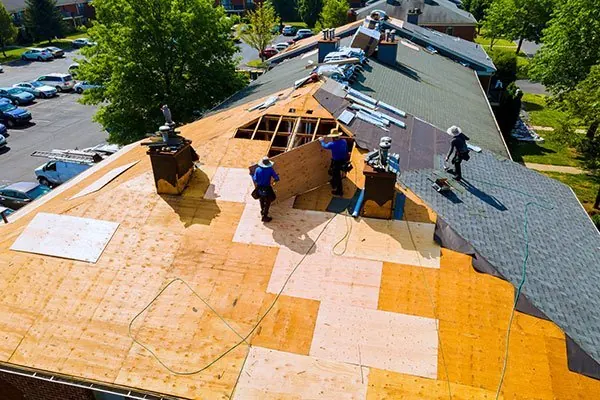
The crew sets up edge protection, then removes the old roof in manageable sections. With the roof open, the battens and rafters can be checked properly for rot, termite damage and old water staining. Damaged timber is replaced and the frame is tied down to suit the site's wind classification, which a certifier or engineer sets.
Next comes a foil blanket or sarking. Under steel, an insulated blanket cuts radiant heat and reduces the condensation that drips into roof spaces on humid nights. Then the new sheets or tiles go on, followed by ridge capping, valleys, flashings against walls and around chimneys, and sealing at every penetration. Most crews finish by clearing the gutters, running a magnet over the yard for screws and nails, and taking the old roof away.
Choosing the new roof
Most Brisbane re-roofs end up in steel because it is light, quick to install and handles big summer downpours at lower pitches. Tiles still make sense on some houses, especially where the street has a consistent tiled character or the owner prefers the look and the thermal mass.
| Consideration | Steel sheeting | Concrete or terracotta tile |
|---|---|---|
| Weight on the frame | Light | Heavy; frame must be checked |
| Low-pitch roofs | Suits many profiles | Needs a minimum pitch |
| Storm and hail | Can dent in large hail | Individual tiles can crack |
| Noise in heavy rain | Reduced by an insulated blanket | Naturally quieter |
| Near the bay | Ask about the right steel grade | Fixings and flashings still need care |
Our guide to the best roofing materials for Brisbane's climate goes deeper on each option.
Approvals, licences and asbestos
In Queensland the QBCC licenses roofing contractors, and work above the QBCC's value threshold must be done by a licensed contractor. Whether a re-roof needs building approval depends on what changes: a like-for-like replacement often proceeds without it, while a heavier material, structural changes or work on a house covered by a Brisbane City Council character overlay may need one. A private building certifier can tell you before work starts. If the roof contains asbestos, a licensed removalist takes it off first.
We ask the contractors we work with to hold the licences and insurance the job needs. Ask to see them before work starts.
Getting a quote
Call or send the form with a few details about the house. A local contractor inspects the roof, takes photos, and gives you an itemised quote. For planning numbers before then, see the Brisbane roof replacement cost page.