The stages at a glance
A roof replacement in Brisbane moves through a set order: planning, preparation, removal, structural repairs, installation and finishing. Knowing that sequence helps you compare quotes, prepare the house and understand what is happening on site. Here are the main stages before we look at each one in more detail.
- Inspection and assessment
- Quotes and choosing a contractor
- Material and colour selection
- Asbestos testing, approvals and engineering checks
- Scheduling and site setup
- Stripping the old roof
- Framing and batten repairs
- Sarking, insulation and ventilation
- Installing the new roof
- Flashings, ridges and penetrations
- Gutters, downpipes and fascia
- Clean-up, final inspection and handover
Stage 1: Inspection and assessment
A contractor inspects the roof surface, the roof space, gutters and framing to confirm whether replacement is needed and what the job involves. Our roof inspection checklist lists what a thorough inspection should cover.
Stage 2: Quotes and choosing a contractor
Get written quotes on the same scope so they can be compared fairly. Each quote should spell out removal, disposal, materials, sarking, flashings, gutters, any allowances for hidden timber damage and how variations are handled. For help weighing up quotes, see choosing the right roofing contractor in Brisbane. The QBCC sets the value above which roofing work needs a licensed contractor, so check the current threshold on the QBCC website.
Stage 3: Material and colour selection
Decide on the roofing material, profile and colour. Many Brisbane homeowners choose steel such as Colorbond for its light weight and range of colours, while others stay with terracotta or concrete tiles to suit the house's style. Lighter colours generally reflect more heat, which matters in a Brisbane summer. If the house sits in a character overlay, check whether Council has expectations about the roof's appearance.
Stage 4: Testing, approvals and engineering
Before any stripping starts, a few compliance questions need answers:
- Asbestos. Older roofs and eaves may contain asbestos cement. Testing comes first, and removal above a small area needs a licensed removalist under Workplace Health and Safety Queensland rules.
- Approval. A private building certifier or Brisbane City Council can confirm whether your re-roof needs approval. Changing roof weight or structure, or working in a character overlay, makes it more likely.
- Wind classification. The certifier or engineer sets the site's wind classification, which determines batten spacing, fixing patterns and tie-downs.
Our guide to roof replacement regulations and permits explains these in more depth.
Stage 5: Scheduling and site setup
Once materials are ordered and approvals are in place, the contractor books a start date. On day one, the crew sets up edge protection or scaffolding, arranges a skip or trailer for waste, and protects areas such as paths and garden beds. If solar panels are fitted, a qualified installer usually removes them first.
Stage 6: Stripping the old roof
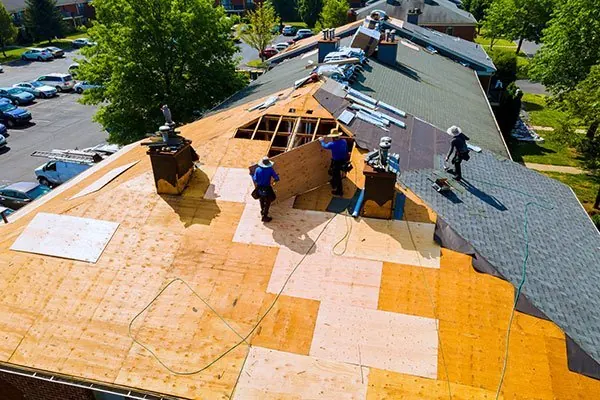
The old tiles or sheets come off, along with old ridge capping and flashings. Crews usually work section by section, only opening as much as they can re-cover before the end of the day or before a storm. This matters in Brisbane, where afternoon storms can build quickly in summer.
Stage 7: Framing and batten repairs
With the roof open, the contractor checks rafters and battens for rot, termite damage, sagging or corrosion. Damaged timber is replaced, and battens may be replaced or upgraded to suit the new material and wind requirements. Converting from tiles to metal often involves re-battening at different spacings.
Stage 8: Sarking, insulation and ventilation
Sarking is laid over the battens, and this is the easiest time to add or upgrade ceiling insulation and ventilation, since access is wide open. Options like whirlybirds or ridge vents help release built-up heat and moisture. See roof ventilation upgrades during replacement for more.
Stage 9: Installing the new roof
Metal sheets are fixed to the battens with screws in a pattern that suits the wind classification. Tiles are laid in courses, with clips or ties as required. Correct overlaps, alignment and fixing are what keep the roof watertight in heavy rain.
Stage 10: Flashings, ridges and penetrations
Flashings are fitted where the roof meets walls, chimneys and skylights, and around pipes and vents. Ridge and hip caps go on last. On tile roofs, ridges are bedded and pointed or mechanically fixed. Near the bay, fixings and flashings should suit the salt exposure.
Stage 11: Gutters, downpipes and fascia
New gutters and downpipes are often fitted as the roof edges are finished. Brisbane's heavy downpours make this worth getting right, with sufficient gutter size and downpipe numbers. Our page on gutter and downpipe replacement covers the options.
Stage 12: Clean-up and handover
The crew removes waste, cleans gutters and sweeps the yard for screws and nails. Any solar panels and antennas are reinstated. Walk the roof line with the contractor, check the roof space for daylight and confirm the paperwork, including what manufacturer warranty applies to the materials.
How the sequence varies between jobs
Not every project follows the stages in a perfectly straight line. On larger homes, stages 6 to 10 usually repeat face by face, so one side of the roof may be finished while another is still being stripped. Where asbestos is present, the licensed removalist completes their work and clearance before the roofing crew moves in, which effectively splits the job into two phases. Storm-damaged roofs often begin with a temporary make-safe, such as tarping, well before the planned replacement starts.
Older Queenslanders and timber homes on stumps tend to spend longer at stage 7, because decades-old battens and verandah framing often need attention. Newer project homes usually move through that stage quickly, with more of the effort going into flashing complex hips and valleys.
Planning your budget around the stages
Most stages above affect price, especially asbestos removal, framing repairs and gutter upgrades. Our roof replacement cost guide explains how each one feeds into a quote. We can arrange quotes from contractors we work with; we ask them to hold the licences and insurance the job needs, so ask to see them before work starts.
General information for Brisbane homeowners, written for planning, not a substitute for someone inspecting your roof. Rules and products change; confirm details with Brisbane City Council, the QBCC or the agency named before acting.