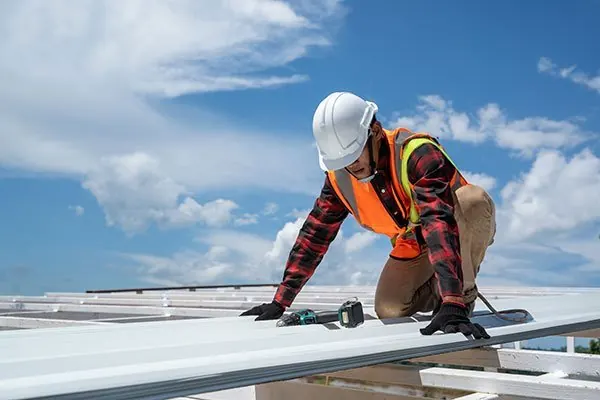
What a Colorbond re-roof involves
A Colorbond roof replacement removes the existing roof covering, repairs or replaces the battens, adds sarking or an insulation blanket, and fixes new pre-painted steel sheets with matching ridge capping, flashings and trims. It is one of the most requested re-roofing jobs in Brisbane because steel suits both old timber homes and newer builds. The finished roof depends on a handful of choices you make before work starts, and this page walks through them in the order a contractor will usually raise them.
Decision 1: the profile
Colorbond steel is rolled into several shapes, and each looks and behaves a little differently.
- Corrugated. The classic wavy sheet seen on Queenslanders and workers' cottages. It is often the expected profile in character areas and suits most pitches.
- Trapezoidal or ribbed. Deeper, squarer ribs that span further between battens and suit lower pitches and longer runs. Common on modern homes and extensions.
- Tile-look profiles. Pressed to resemble tiles, sometimes used where owners want a steel roof without changing the house's look much.
- Concealed-fix or standing seam. Clean lines with fewer visible screws, popular on contemporary designs and skillion roofs.
Your roof pitch, the span between battens and the look of the street all narrow the field. In a Brisbane City Council character overlay, it is worth asking early whether a particular profile is expected.
Decision 2: the colour
Colour affects comfort as well as looks. Paler shades reflect more heat, which helps during long humid summers, while darker shades soak it up. A few practical points:
- Check the solar reflectance data the manufacturer publishes for each colour.
- Consider what neighbours and any estate covenants or overlays allow.
- Look at a physical sample outside, because colours read differently in strong Queensland light.
- Think about how the colour works with gutters, fascia and any solar panels.
Decision 3: what goes under the sheets
The layer beneath the steel matters as much as the steel itself. Options include reflective foil sarking, which helps manage condensation and radiant heat, and an insulation blanket, which adds thermal and acoustic insulation in one. In Brisbane's humidity, condensation control is a real concern on steel roofs, so make sure the quote states exactly what underlay is included. Our article on roof ventilation upgrades explains how vents and whirlybirds can work alongside it.
Decision 4: flashings, gutters and the edges
Most leaks on new roofs start at junctions rather than the sheets. Look for:
- New flashings where the roof meets walls, chimneys, skylights and valleys.
- Fixings and flashings compatible with the sheet material, so you are not mixing metals that react.
- Gutter and downpipe capacity suited to Brisbane cloudbursts. Many owners replace them at the same time; see gutter and downpipe replacement.
Decision 5: solar, rainwater and future add-ons
A new roof is the easiest moment to plan for anything that will sit on it later. If you already have solar panels, they will need to come off and go back on, usually handled by an electrician working alongside the roofer. If you are planning solar, tell the contractor now so the sheet profile and fixing layout suit the mounting brackets you are likely to use.
Rainwater tanks are another consideration. Many owners collect run-off from steel roofs, so ask whether the paint system and any sealants are suitable for drinking-water collection under the manufacturer's guidance, and make sure first-flush diverters and leaf guards fit the new gutters.
Timing around storm season
Brisbane's storm season tends to run from late spring through summer. A re-roof leaves part of the house open for a short time, so contractors plan each section to be weathertight by the end of the day and watch the forecast closely. Booking outside the busiest storm months can make scheduling easier, though work goes ahead year-round. If your current roof is already leaking, a temporary repair can buy time while you settle on the decisions above.
Converting from tiles to Colorbond
Plenty of lowset brick-and-tile homes from the 1960s to 1980s are moving to steel. The tiles and their battens come off, new battens spaced for steel go on, and the roof becomes much lighter. Because the weight and fixing method change, a certifier may need to confirm the roof meets the wind classification for the site. If the old roof has fibre-cement sheeting anywhere, such as an eave lining or old extension, asbestos rules from Workplace Health and Safety Queensland may apply.
If you are still deciding between painted and unpainted steel, our Zincalume vs Colorbond comparison covers the differences.
Bayside and exposed sites
Homes near Moreton Bay, in suburbs such as Wynnum, Manly or Sandgate, face salt-laden air. Check the manufacturer's environment guidance for your distance from the bay or breaking surf, because a different product or steel grade may be recommended. Fixings and flashings need to match that choice too. Exposed hilltop sites may also carry a higher wind classification, which affects batten spacing and screw patterns.
What to ask for in a quote
When you compare quotes, check that each one clearly lists:
| Item | What to confirm |
|---|---|
| Sheet product and profile | Exact product and profile named |
| Underlay | Sarking, blanket or both |
| Battens | Reused, replaced, or checked and partly replaced |
| Flashings and capping | New, in matching colour |
| Gutters and downpipes | Included or separate |
| Disposal | Removal of old roofing, including any asbestos handling |
| Warranty | Which manufacturer warranty applies and what workmanship terms are offered |
Prices vary widely with roof size, access and pitch. The roof replacement cost guide explains what pushes a quote up or down.
Getting quotes
We arrange quotes from contractors we work with who regularly install Colorbond across Brisbane. We ask the contractors we work with to hold the licences and insurance the job needs, so ask to see them before work starts. You can read more about the service on the Colorbond roofing page.
General information for Brisbane homeowners, written for planning, not a substitute for someone inspecting your roof. Rules and products change; confirm details with Brisbane City Council, the QBCC or the agency named before acting.